Farmer to Doctor: Health Checks Producers Shouldn’t Ignore
By Jason Vance
As the average age of American farmers climbs into the late 50s, health concerns that often go unchecked in the agricultural community are becoming harder to ignore. Long days, physically demanding labor and a tendency to “push through” discomfort often lead many producers to delay routine medical care.
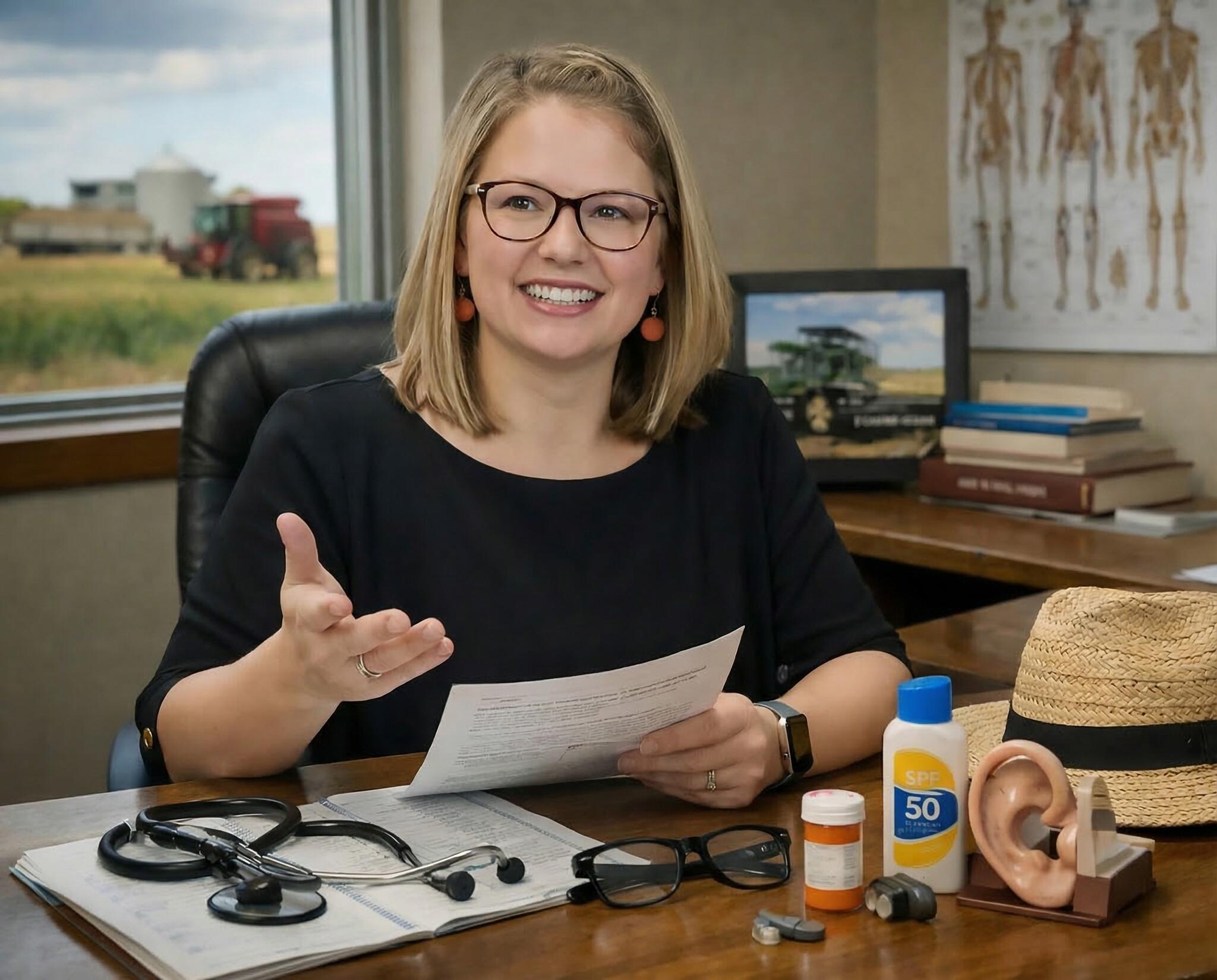
That’s something Erin Martinez, associate director for extension programs at Kansas State University and former state aging specialist, hopes to change.
“Preventative care is key,” Martinez said. “A lot of the things we see impacting producers are things that can be managed—or even avoided—if they’re caught early.”
One of the most important—and often avoided—preventative measures is screening for colorectal cancer. According to the American Cancer Society, adults at average risk should begin regular screenings at age 45. For many producers, that milestone has already passed.
“The risk increases as we age, so if you haven’t been screened, now is the time,” Martinez said.
While colonoscopies may not top anyone’s list during planting or harvest, they remain one of the most effective tools for catching problems early, when treatment is most successful.
Time spent outdoors also puts farmers and ranchers at greater risk for skin cancer. Martinez said prevention starts with practical steps like wearing sunscreen, lightweight long-sleeve shirts and wide-brimmed hats. Eye protection is just as important.
“Sunglasses aren’t just a fashion statement,” she said. “They help protect your eyes from UV rays, which can cause damage over time.”
She encourages producers to pay attention to any new or changing spots on their skin and to seek medical advice if something doesn’t look right.
Noise exposure from tractors, combines and other equipment presents another long-term health concern. Untreated hearing loss has been strongly linked to dementia, making hearing protection more important than many realize.
“Hearing protection isn’t just about your ears—it’s about your overall health,” Martinez said.
She noted that proper protective gear—not just earbuds—is essential, and that modern hearing aids have improved significantly in both performance and affordability.
Many producers also accept chronic aches and pains as simply part of getting older, but Martinez said that isn’t necessarily the case. Conditions like arthritis can often be managed with movement and physical therapy.
“I like to say ‘motion is lotion,’” she said. “Keeping joints active is one of the best ways to maintain mobility.”
Falls are another serious concern, particularly in agricultural settings where uneven terrain, slick surfaces and climbing equipment are part of daily life. Falls remain the leading cause of preventable injury among older adults, and the risk is often higher for producers.
Martinez recommends discussing fall risk with a healthcare provider or using tools from organizations like the National Council on Aging.
“Understanding your risk is the first step in preventing a serious injury,” she said.
At a minimum, Martinez encourages all producers to visit a healthcare provider once a year. Routine checkups and bloodwork can help monitor cholesterol, blood sugar and early signs of conditions such as Type 2 diabetes.
“These numbers can tell us a lot,” she said. “If they start to trend in the wrong direction, we can make changes before it becomes a crisis.”
For those looking for guidance, Martinez recommends reaching out to local extension offices, which can connect individuals with trusted health resources and programs.
For farmers and ranchers, the work rarely slows down. But taking time for routine medical care, Martinez said, is essential to staying healthy enough to keep going.
“Your health is one of your most important assets,” she said. “And it’s worth protecting.”