
Beekeeper Uses Careful Approach To Manage Bee Hives
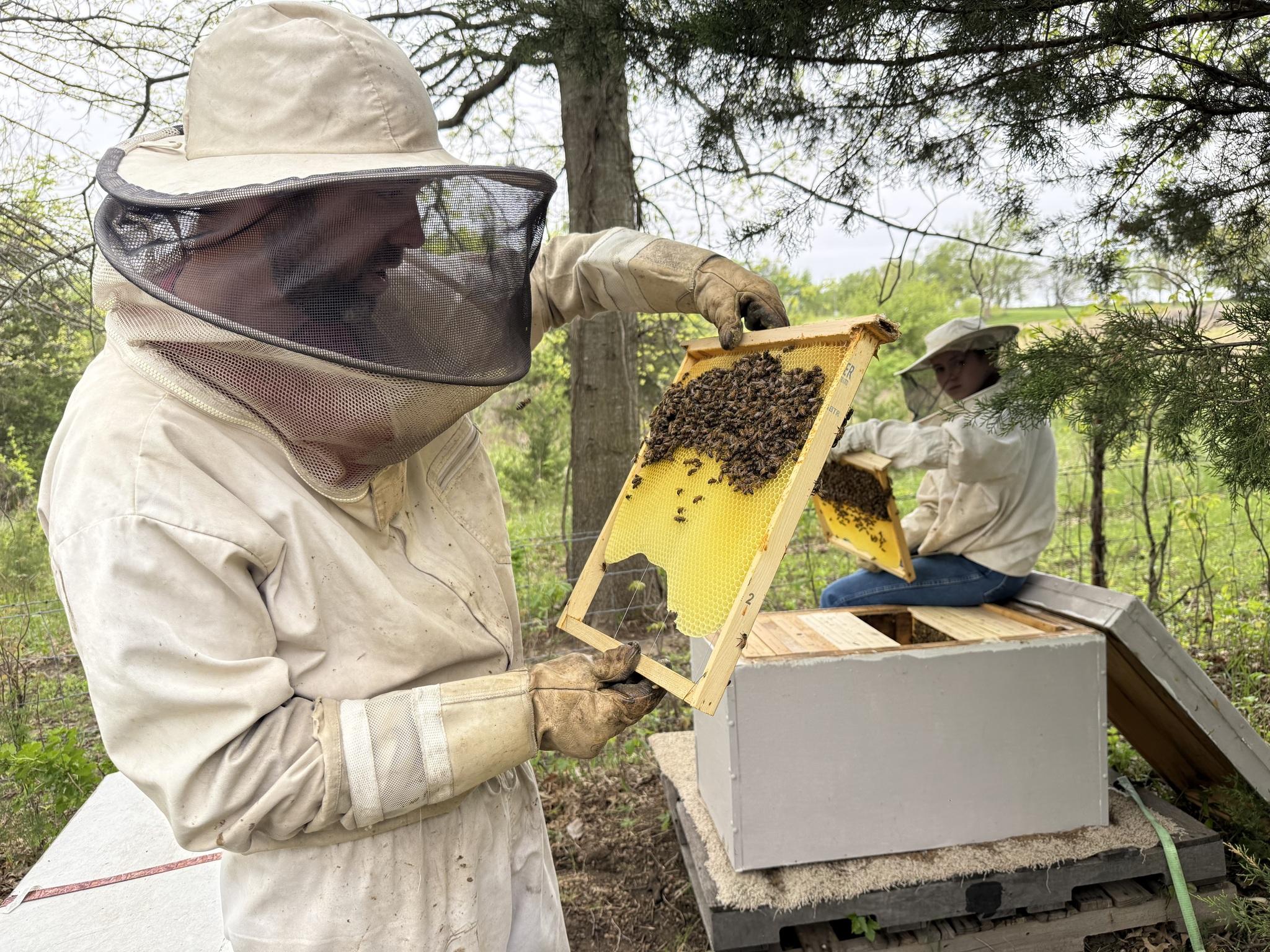
Michael Beach looks for a health brood frame to transfer to a hive with no queen in hopes that the hive will raise a queen from the other hives brood.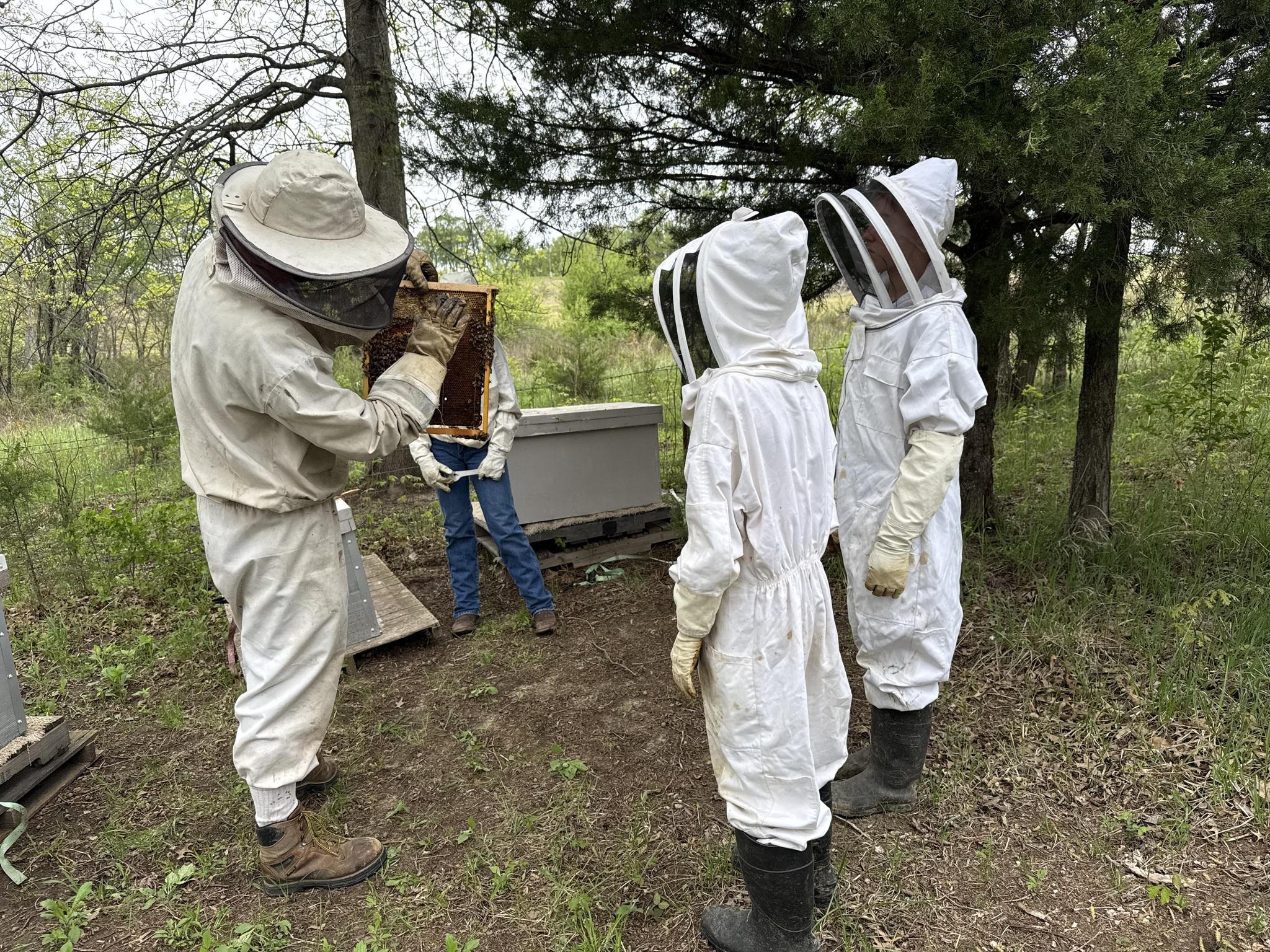
Beach also teaches young aspiring beekeepers how to inspect bee colonies for health.
Gabe Stark
Reporter
Editor’s Note: This is part two of a two-part series. Part one, “Local Beekeeper is Swarming with Bees” published May 12 online and in the May 29 print edition.
Michael Beach is a local beekeeper who manages honeybee hives on several properties in the Trenton and Laredo area. He spoke with the Telegraph to share awareness about his profession and to educate others on the lives of bees.
His work as a beekeeper involves more than placing hives in a field and waiting for honey. Much of the work is careful, hands-on management.
Hive management
On one property, Beach estimates he has 12 or 13 hives. Depending on the time of year and the strength of the colony, each hive can hold anywhere from 10,000 to 80,000 bees.
During the warmer months, Beach said he tries to inspect his hives at least every couple of weeks. One of the main things he watches for is whether the bees have enough room. If a hive becomes too crowded, the colony may prepare to swarm, with the old queen leaving with part of the bees to find a new home.
Beach said keeping ahead of that growth is part of managing the hive.
Before opening a hive, Beach uses smoke at the entrance.
“Bees communicate a lot through smells, and so when you throw a bunch of smoke in there, it kind of disrupts their communication,” Beach said.
The smoke also may cause bees to begin eating honey, an instinct connected to their natural response to possible fire. Beach said bees are used to living in trees, so smoke can signal that they may need to prepare to leave quickly.
Once the hive is open, Beach begins inspecting the frames. He looks for honey, pollen, comb, eggs and brood, which is the term used for developing bees.
Types of bees
Some frames hold capped honey, where bees have filled the cells with honey and sealed them with wax. Other frames may contain brood. Worker brood becomes female worker bees, while drone brood becomes male bees.
Beach said the different types of brood can be identified by looking closely at the cells. Drone cells are larger than worker cells. Worker bees take about 21 days to develop from egg to adult, while drones take about 24 days. Queens develop faster, taking about 14 days.
The queen is one of the most important things Beach watches for during an inspection. A strong hive needs a healthy queen to continue laying fertilized eggs. A queen may lay more than 1,000 eggs per day during the busy season.
If a hive has no worker brood and only drone brood, Beach said that can be a sign the hive has lost its queen. Without a queen, a colony cannot continue producing the worker bees it needs to survive.
Beach said the solution is not as simple as moving a queen from one hive to another.
“If I took a good queen and just put her in here, they’ll kill her,” Beach said.
Each hive has its own scent, which is tied to the queen. Because of that, bees are able to recognize when another bee or queen does not belong.
Instead, Beach may move a frame of eggs from a strong hive into a queenless hive. If the eggs are fresh enough, the bees can use them to raise a new queen.
Beach said he takes care when moving a frame from a strong colony. Before removing it, he checks to make sure the queen from the healthy hive is not on the frame. Accidentally moving or harming the queen from a strong hive could create another problem.
Types of hives
The type of hive also affects how Beach works.
He uses traditional Langstroth hives, the stacked boxes many people recognize, as well as horizontal Layens-style hives. The horizontal hives have thick walls and are insulated with sheep’s wool. Beach said that helps the bees manage temperature, keeping the hive cooler in summer and warmer in winter.
The horizontal design also allows him to inspect part of the hive without disturbing the entire colony.
“If all the brood is over here, and I only want to just take a peek in the side to see if they need more space, I don’t have to disrupt all the bees,” Beach said.
With a stacked hive, Beach said opening the top allows heat to escape and disturbs the box more quickly. Still, he uses both styles and has had some of his traditional boxes and frames for years.
Beach also takes steps to protect the hives from outside problems. He uses straps to help keep lids in place, especially during wind or if animals bump the boxes.
Honey production
Harvesting honey is another part of the work, but Beach said not every hive produces surplus honey every year.
A healthy hive may produce around 100 pounds of honey in a good summer, but he only harvests from hives that have enough extra.
When he does harvest, Beach removes frames that contain only honey. He scrapes the wax cappings off the cells and places the frames into a spinner, which removes the honey while preserving the comb. The same frame can then be returned to the hive, allowing the bees to refill the comb instead of starting over.
Beach said he generally does not use queen excluders, which are barriers that keep the queen from moving into honey boxes. He said he has found them unnecessary because the queen usually keeps the brood nest in one area of the hive while the rest of the hive is used for honey.
Through each step, Beach said the work of beekeeping is about understanding what bees are doing and responding to what the hive needs.
A hive may need more space. It may need help replacing a queen. It may need protection from weather. It may simply need to be left alone.
For Beach, that careful attention is part of the appeal of beekeeping. Each inspection gives him a better understanding of the colony and its condition.
The bees do much of the work themselves. Beach’s job is to help give them the best chance to keep doing it, he said.