
Proper Harvesting, Curing Key to Sweet Potato Storage
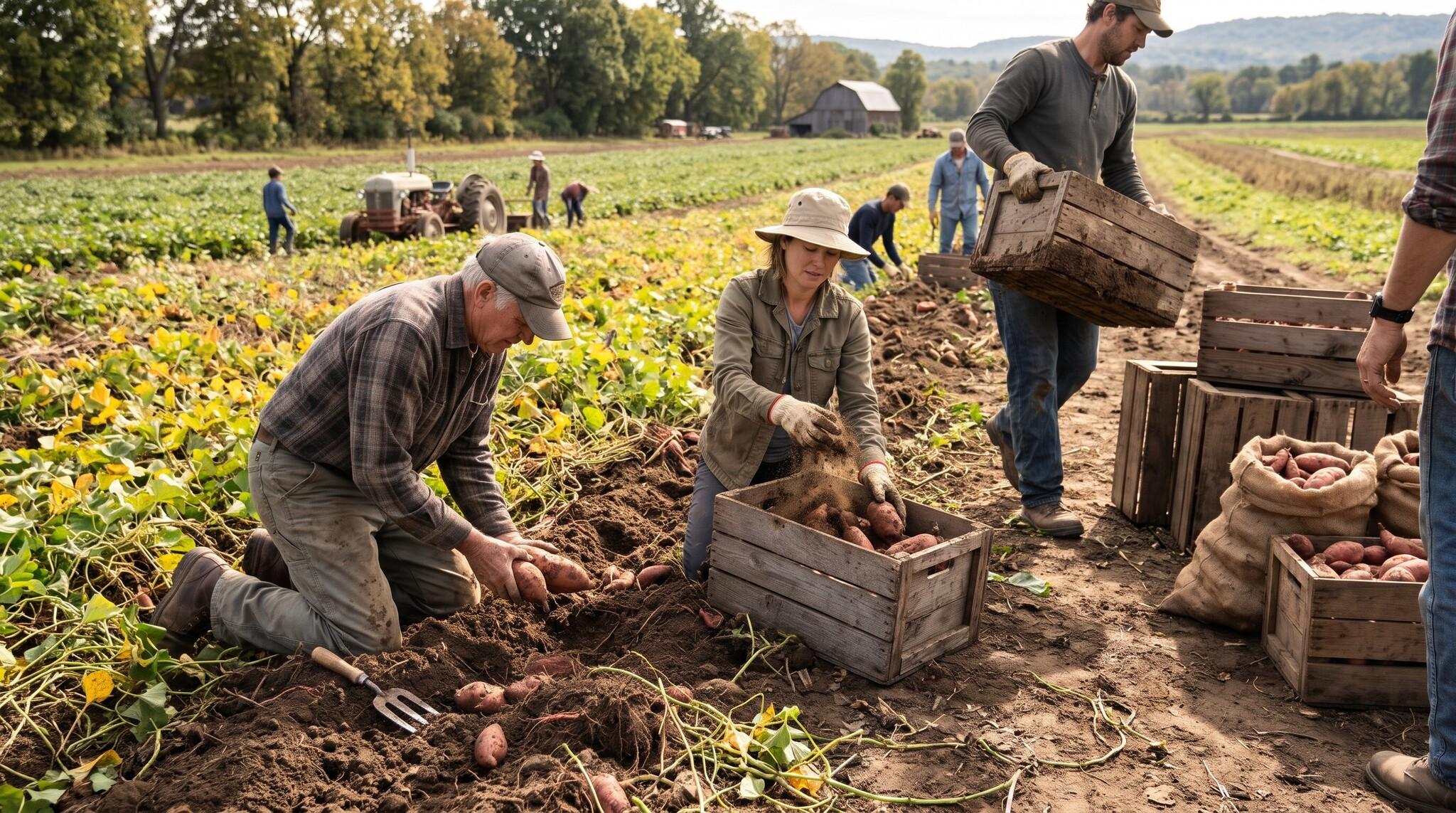
Photo by Jason Vance
By Jason Vance
Sweet potato harvest is underway in some parts of the country, and growers still have several weeks to dig their crops, depending on the size of the roots they want and the arrival of cold weather.
Kansas State University Extension horticulture expert Matt McKernan said sweet potatoes differ from many other fruits and vegetables because they do not reach a specific stage of maturity that signals they are ready to harvest.
“Sweet potatoes just continue to grow and grow and grow until they’ve reached the desired size where you’re ready to harvest them, or we start to get our first onset of cold weather and the plants are killed by frost and freezes,” McKernan said.
Many gardeners prefer sweet potatoes measuring 3 to 9 inches long and 1 1/2 to 3 1/2 inches in diameter. However, the roots can continue growing much larger if left in the ground.
Regardless of their size, McKernan said growers need to pay attention to the weather. Sweet potatoes are sensitive to cold temperatures, and frost or freezing conditions can damage both the vines and the roots.
Gardeners should plan to harvest their sweet potatoes when they reach the desired size or dig them promptly after the first frost kills the vines. Waiting too long can expose the roots to damaging cold temperatures.
The harvesting process begins with removing the vines, which can spread several feet across a garden. For small plantings, gardeners can cut the vines by hand. Those growing sweet potatoes in larger areas may find it easier to mow off the vines.
After removing the foliage, McKernan recommends locating the central vine and carefully uncovering the tops of the roots. This helps gardeners estimate the size and orientation of the sweet potatoes beneath the soil before digging.
A potato fork can then be used to loosen the soil around the outside edges of the roots and gently lift them from the ground.
Care is particularly important during this step because sweet potatoes bruise easily and can be cut or damaged by shovels and other digging tools. Damaged roots are more susceptible to storage problems, making gentle handling essential.
Sweet potatoes also may remain attached to the vines after digging. Gardeners can use scissors or pruning shears to separate the roots from the vines, while smaller roots attached to the potatoes generally break off easily.
Once harvested, sweet potatoes need to be cured before long-term storage. McKernan said curing helps heal wounds and skin damage that may have occurred during digging, improves storage life and begins converting the starches in the roots into sugars that enhance flavor and texture.
For best results, freshly harvested sweet potatoes should remain unwashed during curing. They should be placed in a warm, humid environment for approximately five to 10 days.
Ideally, curing conditions should be maintained at temperatures of 85 to 90 degrees Fahrenheit with relative humidity of 85% to 90%.
Gardeners may need to use a space heater to warm a small room and a humidifier or wet towels to increase humidity. Proper conditions help the roots develop the protective skin needed for storage.
McKernan said one way to check whether sweet potatoes are cured is to rub two roots together. If the skin no longer scratches off easily, the potatoes are ready to move into storage.
Under favorable conditions, curing generally takes five to seven days, although cooler temperatures can extend the process.
After curing, sweet potatoes should be stored in a cool location with temperatures between 50 and 55 degrees Fahrenheit. Unlike some other root crops, sweet potatoes do not tolerate cold storage well.
Temperatures below 50 degrees can injure the roots, shorten their storage life and contribute to undesirable flavors.
When harvested carefully, cured properly and stored at the appropriate temperature, sweet potatoes can last for several months, allowing gardeners to enjoy their crop throughout the winter.
McKernan said paying attention to harvest timing, handling and storage conditions can help gardeners protect the quality of their sweet potatoes long after the growing season ends.