
Local Beekeeper is Swarming with Bees
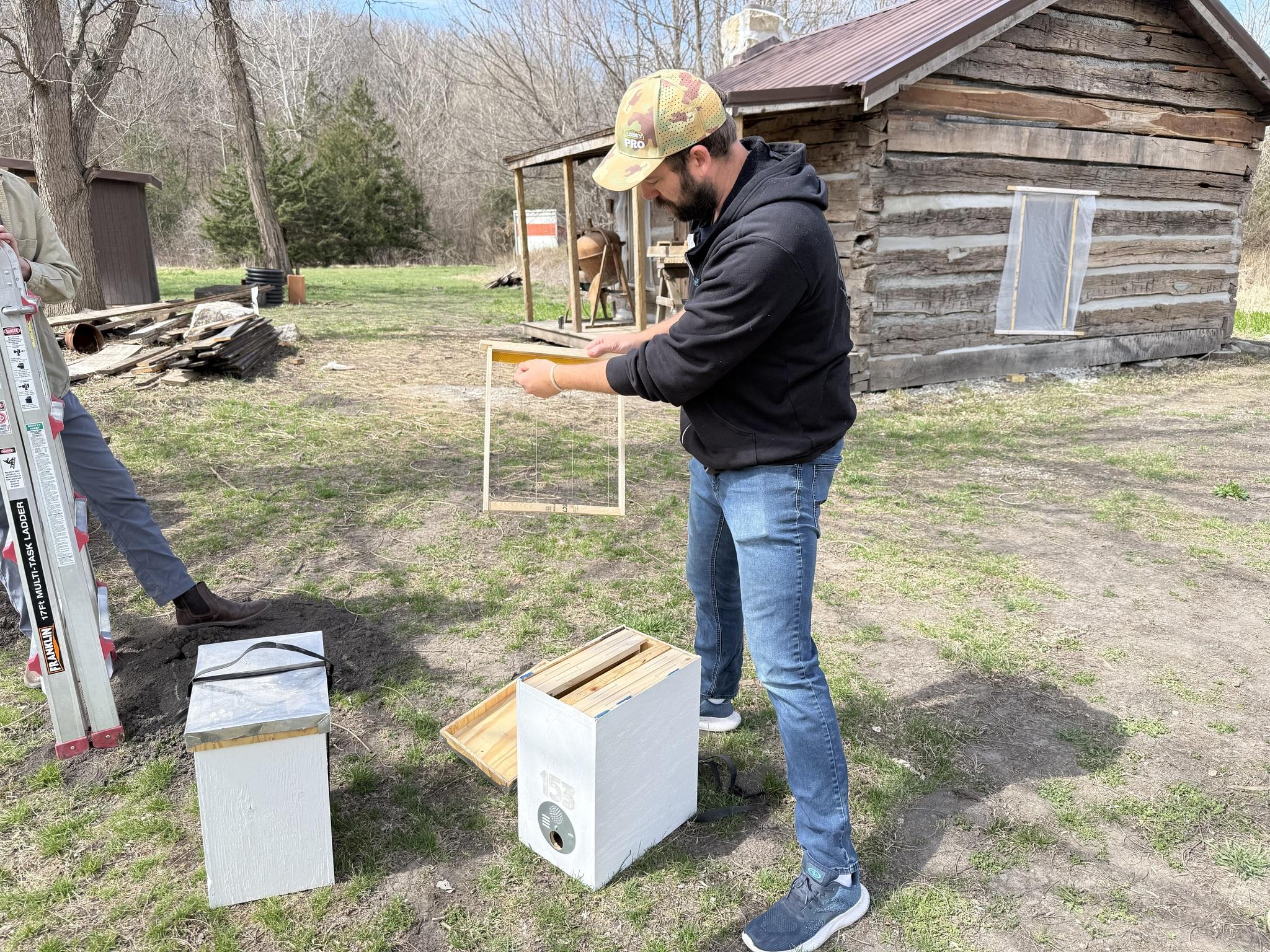
Michael Beech shows the frames that make up the inside of his swarm traps.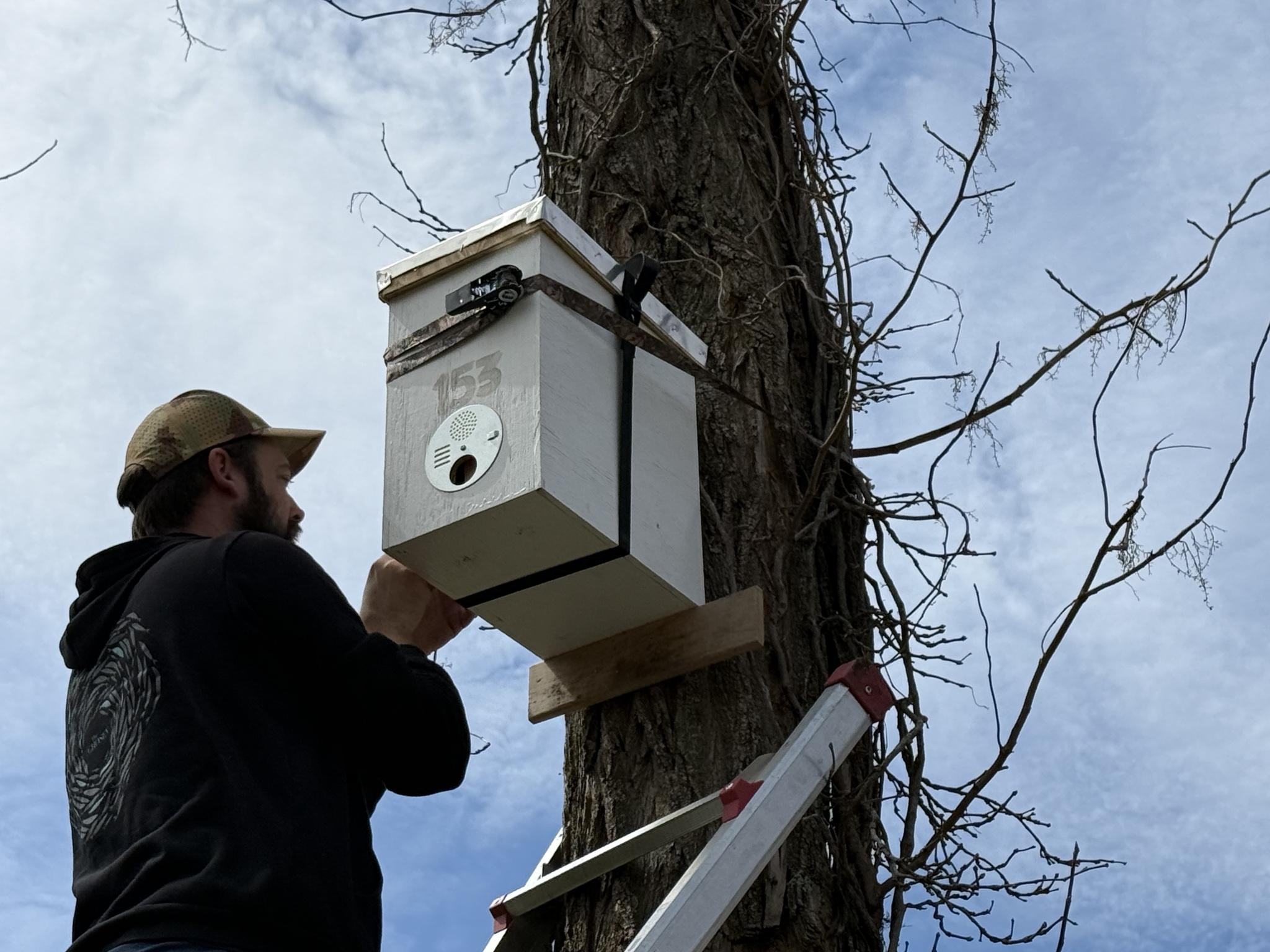
Michael Beach sets up swarm traps at the historic Thompson House to catch hives splitting in the spring.
Gabe Stark
Reporter
Michael Beach is a local beekeeper who manages honeybee hives on several properties in the Trenton and Laredo area. Beach, who has been beekeeping for over a decade, brought some of his hives with him when he moved from Utah. Today, his beekeeping includes caring for 50-plus established hives, catching swarms, working with wild bees and helping others learn more about natural beekeeping.
Beach first became interested in beekeeping because he thought it could become a useful business. Over time, that changed.
The more he worked with bees, the more interested he became in the colonies themselves — how they grow, how they survive, how they reproduce and how local genetics can affect their long-term success.
“Ultimately, I just fell in love,” Beach said. “I fell in love with the bees.”
Beach said beekeeping has become one of the things he would continue doing even if there were no money involved.
“It’s something I would do whether I got paid or not,” Beach said.
Bee characteristics
A major part of his work involves swarms. Swarming is the way a honeybee colony reproduces. When a hive becomes crowded, the bees may raise a new queen. The old queen then leaves with about half of the bees to look for a new home.
Beach tries to give those bees a place to go.
He builds swarm traps, which are smaller boxes designed to attract bees that are searching for a new cavity. The traps contain frames, beeswax and pieces of old comb. The old comb smells like honey and beeswax, which makes it attractive to scout bees.
Beach also uses lemongrass oil in the traps because it closely resembles a scent bees use when marking a good location.
“When the bees are looking for a cavity to move into, if they find a spot that they like, they’ll leave a scent in that location,” Beach said.
Once a swarm moves into a trap, Beach can move the frames into a larger hive. He said the smaller trap may hold six frames, while his larger bee-yard boxes may hold 25. When the queen is moved, the rest of the bees from the hive will follow.
Swarm season usually begins around the middle to the end of April, depending on the weather. Warmer temperatures and blooming plants can start the process earlier.
Wild vs. commercial
He has built a large number of swarm traps and said one of his goals is to catch more swarms. Wild colonies are especially important to Beach.
Commercial bees, he said, are often bred to be gentle and to produce large amounts of honey and brood. While those traits can be useful, Beach said wild bees do not need constant help.
“These bees have proven that they can survive,” he said.
Beach supports natural beekeeping and encourages others to learn about it.
“Ultimately, I know that if the genetics of the bees in the area are better, that’s going to ultimately help my bees to be healthier too,” he said.
Beach wants more people to keep bees in a way that strengthens the local bee population so he works with young people and adults who are new to beekeeping.
He said he enjoys teaching people about bees and natural beekeeping.
“Everybody has their passion for life,” Beach said. “I think for me, bees is that passion.”
Removing bees from properties
Beach also responds to calls from people who find swarms on their property. He said he has removed swarms from trees, trailers and other places where bees have gathered temporarily.
He generally does not charge for swarm removal. However, he said he no longer removes established hives from inside homes or buildings because that work is much more difficult and there is no guarantee the colony will survive.
A swarm, the beekeeper said, is different from a hive. Because the bees are not yet defending a permanent home, they are often less aggressive than people expect. Beach can place a swarm in a box, locate or protect the queen and move the colony to a new hive.
For Beach, each swarm is another opportunity as it may add valuable local genetics to his bee yards. It may also help someone else see bees in a different way.
To learn more about how Beach takes care of his bees, be sure to read part two of this two-art series in next week’s printed Trenton Telegraph. Subscribers also have earlier access online at TrentonTelegraph.com.