
Volatility, Global Pressures Shape Cattle Markets
By Jason Vance
Volatility continues to define today’s cattle markets, with a mix of global uncertainty, weather concerns and supply dynamics driving wide price swings, according to Elliot Dennis.
Dennis, a livestock economist with the University of Nebraska–Lincoln, said both feeder cattle and fed cattle markets have experienced notable fluctuations in recent weeks. However, historically high price levels are making those swings appear even more dramatic.
“Feeder cattle prices are elevated, so even normal movement can feel exaggerated,” Dennis explained. “A lot of that volatility is tied to global risk factors and ongoing concerns about drought and precipitation as we move into spring.”
One way economists track uncertainty is through the options market, where producers and traders establish price floors and ceilings. Dennis noted a significant amount of activity in nearby contracts, particularly around the May feeder cattle market.
“What we’re seeing is risk that’s very front-loaded,” he said. “There’s more uncertainty in the short term than in the longer-term contracts.”
Deferred contracts later in the year have remained relatively stable, suggesting that current volatility is being driven more by immediate global events than long-term supply and demand shifts.
Global Events Ripple Through Markets
International developments—especially tensions involving Iran—are playing a key role in shaping cattle prices. While far removed geographically, these events impact U.S. producers through energy markets.
“Iran is a major oil producer, and disruptions there can increase fuel costs,” Dennis said. “That raises the cost of producing ethanol, which uses corn, and ultimately increases feed costs for cattle.”
Those higher input costs ripple through the supply chain, affecting fed cattle and eventually feeder cattle prices, contributing to the volatility seen in the marketplace.
Given the uncertainty, Dennis emphasized the importance of risk management strategies for producers. While many cattlemen focus on protecting sale prices, he encouraged equal attention to input costs.
“We talk a lot about hedging output prices, but inputs like corn can and should be managed as well,” he said. “Tools like the cattle crush margin help producers lock in profitability by managing both sides.”
Heavier Cattle Offset Smaller Herds
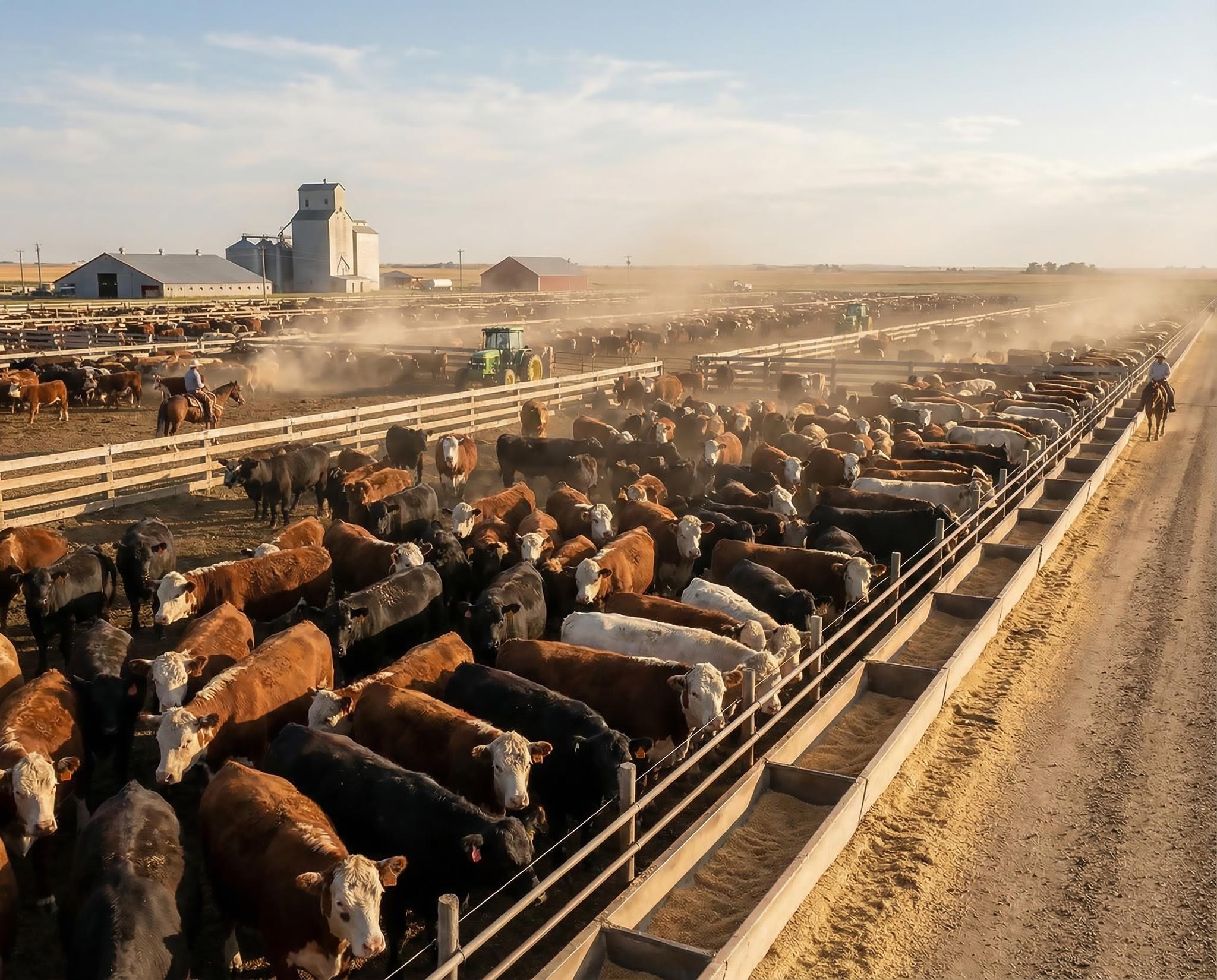
With the U.S. cattle herd at historically tight levels, producers are increasingly feeding cattle to heavier weights to maintain overall beef production.
“We’re short on cattle numbers, so one way to make up total pounds is by feeding them longer,” Dennis said.
Feedlot data shows cattle are staying on feed seven to 10 days longer than a year ago, with even greater increases compared to five-year averages. This has led to higher carcass weights, supported by relatively affordable cost of gain and limited discounts from packers on heavier animals.
However, there are biological limits.
“As cattle get heavier, more of the added weight becomes fat rather than muscle,” Dennis explained. “That reduces efficiency and raises concerns about yield grades.”
Even so, he noted there is still room for growth in carcass weights, though it depends on packer acceptance and the industry’s ability to maximize genetic potential.
Technology Driving Precision Feeding
Advancements in data and genetics are allowing some feedyards to move beyond managing cattle in groups and instead optimize feeding at the individual animal level.
“Cattle are highly variable, even within the same pen,” Dennis said. “We’re starting to see systems that allow us to feed animals to their individual economic potential rather than treating the entire pen the same.”
This shift mirrors earlier advances in animal health, where treatments moved from group-based approaches to individual care.
Labor Disputes Add Uncertainty
Additional market pressure could come from labor disputes in the packing sector. Dennis pointed to a potential strike involving workers at JBS USA facilities.
If realized, the strike could temporarily reduce processing capacity by an estimated 5,500 head per day—about 5 to 6 percent of daily throughput.
“That creates a wedge between boxed beef prices and live cattle prices,” Dennis said. “Boxed beef tends to rise while live cattle prices soften due to reduced processing capacity.”
While such disruptions are often temporary, their duration determines how significantly markets adjust.
Building Strength in Local Processing
To address longer-term challenges in the meat supply chain, the University of Nebraska–Lincoln is investing in education for small and mid-sized processors through its Meat Manager Training Program.
Now in its third year, the program brings together participants from across the country for hands-on instruction in business management, plant design and operational efficiency.
“We’ve had processors from multiple states come through,” Dennis said. “It’s about building stronger local systems and supporting rural communities.”
Despite current volatility, Dennis said the cattle industry continues to adapt through innovation, risk management and strategic decision-making.
“There are challenges, no doubt,” he said. “But there are also opportunities—from better data to improved genetics—to help producers navigate this environment and remain profitable.”
As global uncertainty and domestic constraints continue to intersect, producers will need to stay vigilant in managing both risk and opportunity in the months ahead.