Atkinson Exhibit Tells Story Of Advocacy After Blindness
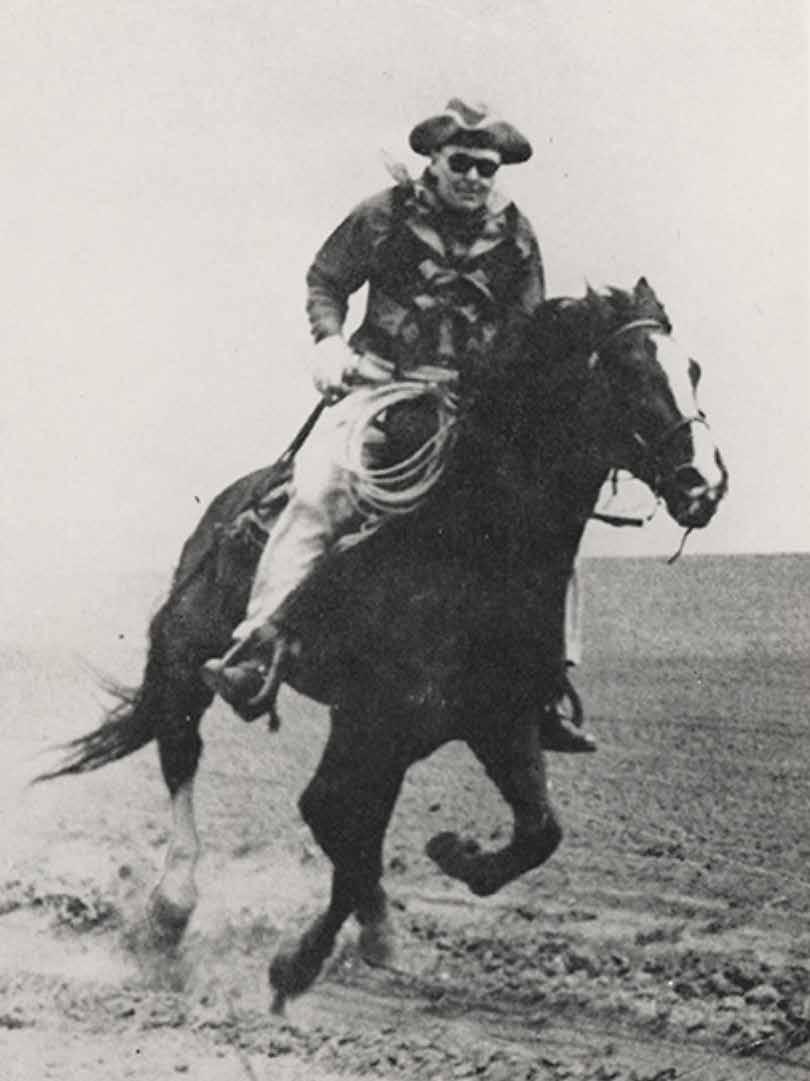
J. Robert Atkinson continued to ride horses after losing his sight, maintaining a lifelong connection to the cowboy life he had known as a young man.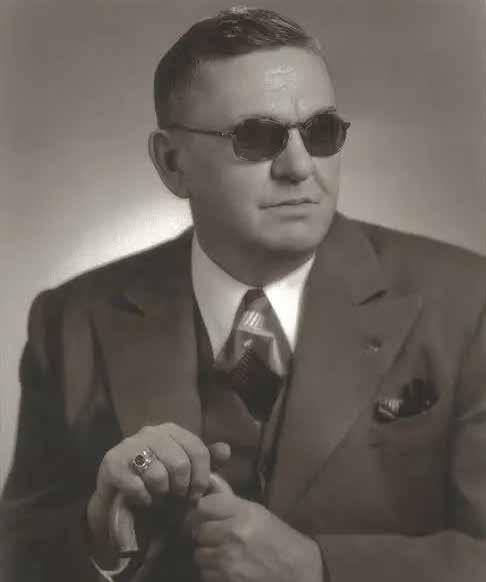
J. Robert Atkinson, a Galt native who became an advocate and innovator for people who were blind, is featured in the Grundy County Museum’s “Notables of Grundy County” exhibit.
New Notables Displays At Grundy County Museum Features Galt Native Who Expanded Braille Printing
Gabe Stark
Reporter
The Grundy County Museum has opened a new group of summer exhibits as part of its annual “Notables of Grundy County” display.
The exhibit features five former Grundy County residents whose lives, work and service left a lasting impact locally and beyond. Each display uses photographs, historical information and other materials to help tell the story of the person being recognized. The Notables of Grundy County exhibits are expected to remain on display through October. Admission to the Grundy County Museum is free.
One of this year’s featured displays honors J. Robert Atkinson, a Galt native who became an advocate and innovator for people who were blind.
Beginnings & career
Atkinson was born Nov. 29, 1887, in Galt. As a teenager, he left school and traveled to Montana, where he worked as a cowboy. At age 16, a firearm accident wounded him in the face and eyes. Doctors later removed his eyes to prevent infection and save his life.
Atkinson struggled deeply after learning he was blind. His mother and brothers moved to Los Angeles to help him, and he later found renewed purpose after attending a Christian Science Church.
Atkinson began learning reading systems for blind people, including Braille, and later taught others to read. When he resumed his own education, he discovered there were few materials available in Braille. With family members dictating to him, he used a Braille typewriter to transcribe educational and other materials.
In 1919, Atkinson met Mary Beecher Longyear, a philanthropist involved in efforts to help the blind. Her support helped establish a Braille printing press and allowed Atkinson to produce the first Braille edition of the King James Bible.
That same year, Atkinson founded the Universal Braille Press in Los Angeles, which later became known as the Braille Institute of America.
Beyond printing
His work expanded beyond printing. In addition to inventing a method of two-sided Braille printing, Atkinson recorded books for the blind, gave speeches, lobbied lawmakers and helped blind people find employment. He spent more than 40 years working to improve opportunities for people who were blind or visually impaired.
The museum display also notes that Atkinson never lost his love of horses and continued to ride cowboy-style after losing his sight.