Why Ponds Turn Green As Fall Approaches
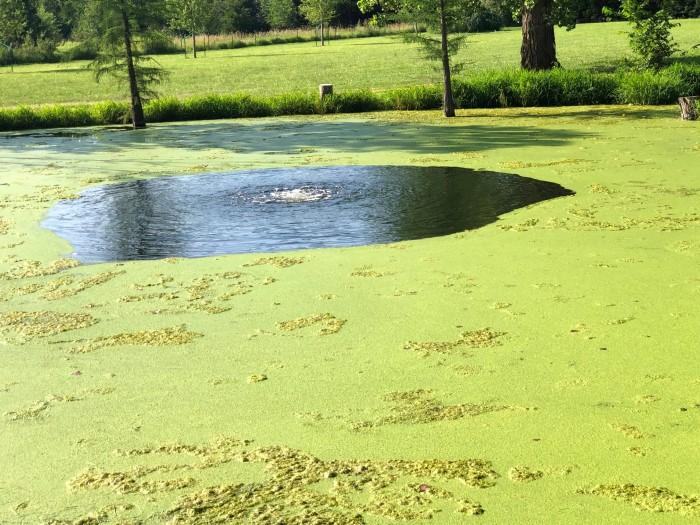
Photo coutesy of Kansas State University.
By Jason Vance
As fall progresses, pond owners may notice their water turning increasingly green. While the color can be a natural part of seasonal pond activity, excessive vegetation and algae growth can also point to problems occurring throughout the pond’s watershed.
Joe Gerken, K-State Fisheries and Aquatics Extension Specialist, said pond growth remains active late in the year, even as temperatures begin to cool.
“We’re reaching the end of the year, but this is the time where growth is still happening,” Gerken said. “There’s been a lot of growth throughout the season, so there’s a lot of plant material in the ponds.”
Gerken said many ponds can appear especially green over the next month as vegetation reaches its seasonal peak. Colder temperatures eventually will slow growth and kill back some of that vegetation.
One factor that can contribute to excessive pond vegetation may be occurring well beyond the pond itself.
“When we think about ponds, we tend to think about what’s going on right at the pond, but there might be things that are occurring throughout the watershed, a distance away from that pond that’s causing things like nutrients to wash into the waterway,” Gerken said.
That makes landscape management an important part of maintaining pond health. Nutrients and sediment moving across fields, pastures and other areas of a watershed eventually can reach the pond.
Sediment can create another problem by gradually making ponds shallower.
As water moves across a watershed, Gerken said, it can pick up soil and sediment. When that water reaches the pond and slows down, the sediment settles to the bottom.
“Over time that causes the pond to fill in,” he said. “And when that happens, ponds get shallower.”
Shallower water allows more sunlight to reach the bottom of the pond, creating better growing conditions for aquatic vegetation. The result can be even more plant growth.
Livestock access also can contribute to both nutrient loading and sedimentation.
Cattle and other livestock entering ponds deposit nutrients into the water. Their activity around the shoreline also can disturb soil.
“They like to walk around the edges of the pond,” Gerken said. “Their hooves can collect different amounts of sediment and carry that into the pond itself, or they can erode the banks.”
Keeping livestock from having unrestricted access to ponds can therefore help reduce both nutrient additions and sediment entering the water.
Not all green ponds look green for the same reason. Gerken said pond owners should pay attention to the type and location of the green material.
A dark green color extending throughout the water may indicate a phytoplankton bloom. Phytoplankton are extremely small plant-like organisms that can occur as individual cells or small colonies. When their numbers become high enough, they can give the entire pond a green appearance.
Blue-green algae, which Gerken said are becoming more common at this time of year, may create a different appearance, particularly near the water’s surface.
Filamentous algae also is common during the fall. Often called “pond moss,” it can appear as floating mats or clumps throughout a pond.
Reducing excessive vegetation starts with management practices well before a pond turns green.
Gerken recommends maintaining riparian vegetation along pond borders and throughout the watershed, particularly in areas where water flows toward the pond. Vegetation can help slow runoff and capture sediment and nutrients before they reach the water.
Limiting livestock access to the pond also can help reduce nutrient loading and erosion.
Nutrient management in fields is another important consideration. Applying fertilizers and other nutrients at appropriate rates reduces the amount available to move with runoff.
“When we’re applying nutrients to our fields, making sure that we’re applying the right amounts so that that excessive nutrient loading is not just washing into our ponds and feeding this excessive vegetation issue” is important, Gerken said.
For pond owners seeing green water this fall, the color is a reminder that pond health often depends on much more than what happens at the water’s edge. Managing the surrounding landscape, controlling erosion and sediment, limiting livestock access and carefully managing nutrients can help reduce excessive growth and keep ponds healthier in the years ahead.